Brain
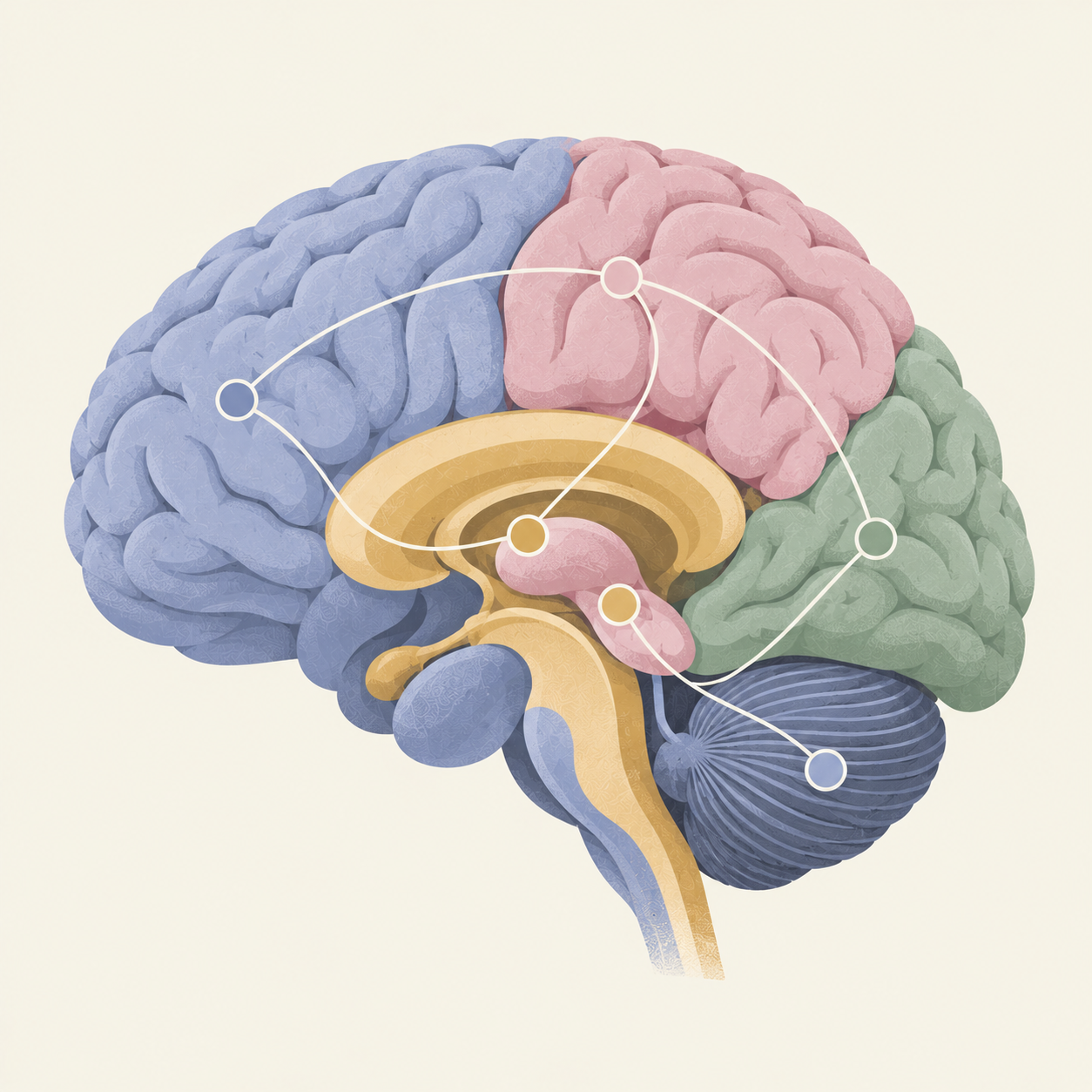
How you think. Attention, the decisions you make, and getting your focus back when the day interrupts you.
The method
Peak Hours™
Peak Hours is a number. It is how many hours of a waking day you can think clearly, decide well, and finish the work that matters. A calendar can say the day has ten hours. Peak Hours is how many of those hours are really available to you.
It matters because those are the hours that carry the day. When they run out, the clock is still going, but the clear work is not.
The B⁴ Scan is where you first see the shape of your day: what carries you, and what is quietly holding the others back. Peak Hours, the hours you can truly use, are measured with the practice.

Brain capital
Brain capital is the name for two things held together: how healthy the brain is, and the skills that brain can use. Peak Hours is the part you can count, because it is the hours in which that health and those skills show up in a real day.
The phrase comes from the McKinsey Health Institute report, written with the World Economic Forum, in January 2026.
Always this order
Every measurement looks at the day in the same four parts, in this order. Together they are the picture behind the Peak Hours number.
How you think. Attention, the decisions you make, and getting your focus back when the day interrupts you.
How you look and recover. When appearance and recovery take attention, they take hours the rest of the day needed.
How you move. Movement that carries the hours you planned, instead of cutting them short.
How your energy holds. When you eat, when you sleep, and whether a strong day can happen again tomorrow.
Peak Hours does not diagnose, does not predict any disease course and does not replace neuropsychological testing.
Twelve weeks
After an assessment, the work follows one order, over twelve weeks. The letters stand for Restore, Elevate, Optimize and Beyond. Each stage has a job, and the next one waits until that job is underway.
Get the base back. Sleep, recovery, and the hours that currently fall away.
Make more of the day usable, and make that last longer than one good morning.
Make those hours repeatable, so a strong day is something you can count on.
Protect them over the years, so the hours you gained stay with you.
The medical backbone
Neuro-C.A.M.P. is the medical reason the method holds together. The letters stand for Cognition, Aesthetics, Movement and Performance: how you think, how you look and recover, how you move, and how you perform. The same four parts of the day, read with a medical eye.
This is why a neurosurgeon leads the assessment. PD Dr. med. habil. Genevieve Ama K. Finjap is habilitated, with ten years of university neurosurgery and neuro-oncology, research at the German Cancer Research Center (DKFZ), and time as Medical Director for motion analysis at the Olympic Training Center Cologne.
About Dr. Finjap